

What makes AI Content Generator useful is not only the fact that it can generate content. Its real strength is the way it helps organize the article before the drafting phase fully begins. With the right workflow, a simple idea can become a structured project, then a defined content direction, and finally a stronger article title ready for the next production stage.
The article starts from a clear operational view
Every efficient content workflow begins with visibility. Before writing, users need to understand where the project lives, how campaigns are organized, and how the editorial process is structured. This is why the dashboard matters. It gives users a practical starting point and helps them work inside a clearer system rather than through disconnected notes and random drafts.
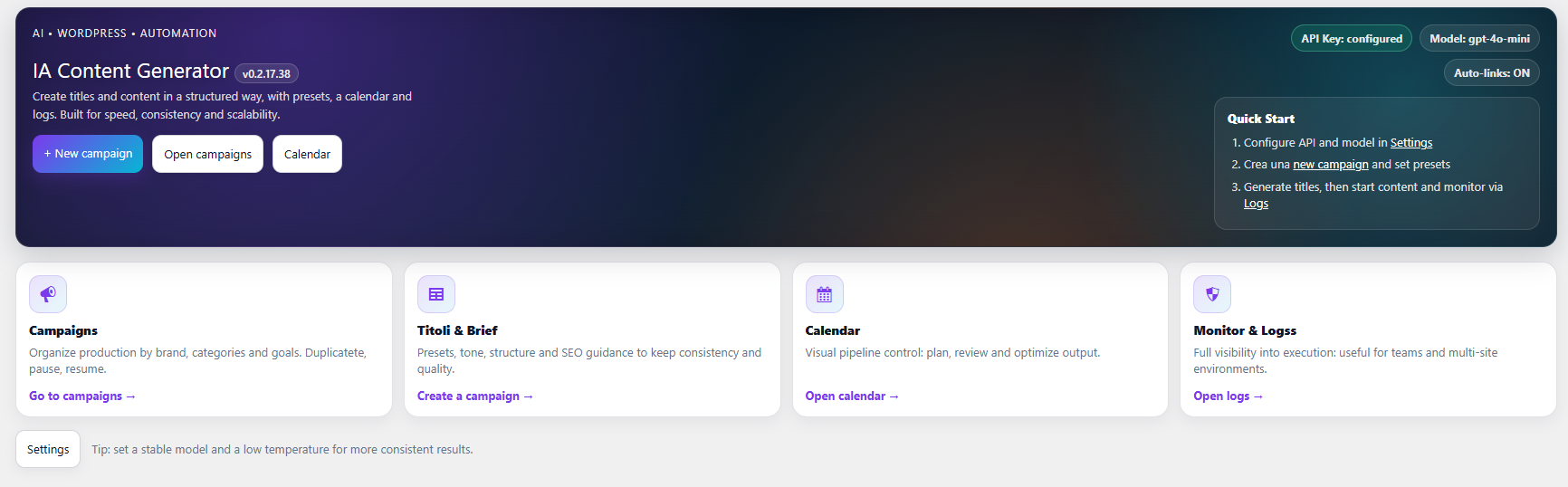
In a topic like How to Choose a Logistics Provider, this first step is important because the article is not treated as an isolated text. It becomes part of a broader editorial workflow. The dashboard helps users understand the system, access the main working areas, and manage the article inside a more structured publishing process.
Base data gives the article its first real structure
Once the workflow begins, the next step is defining the base data. This is where the article starts becoming more than just a topic. Language, campaign logic, and publishing setup begin to shape the direction of the content. For a professional article such as How to Choose a Logistics Provider, this matters because the final output needs to match a specific market, editorial objective, and website structure.
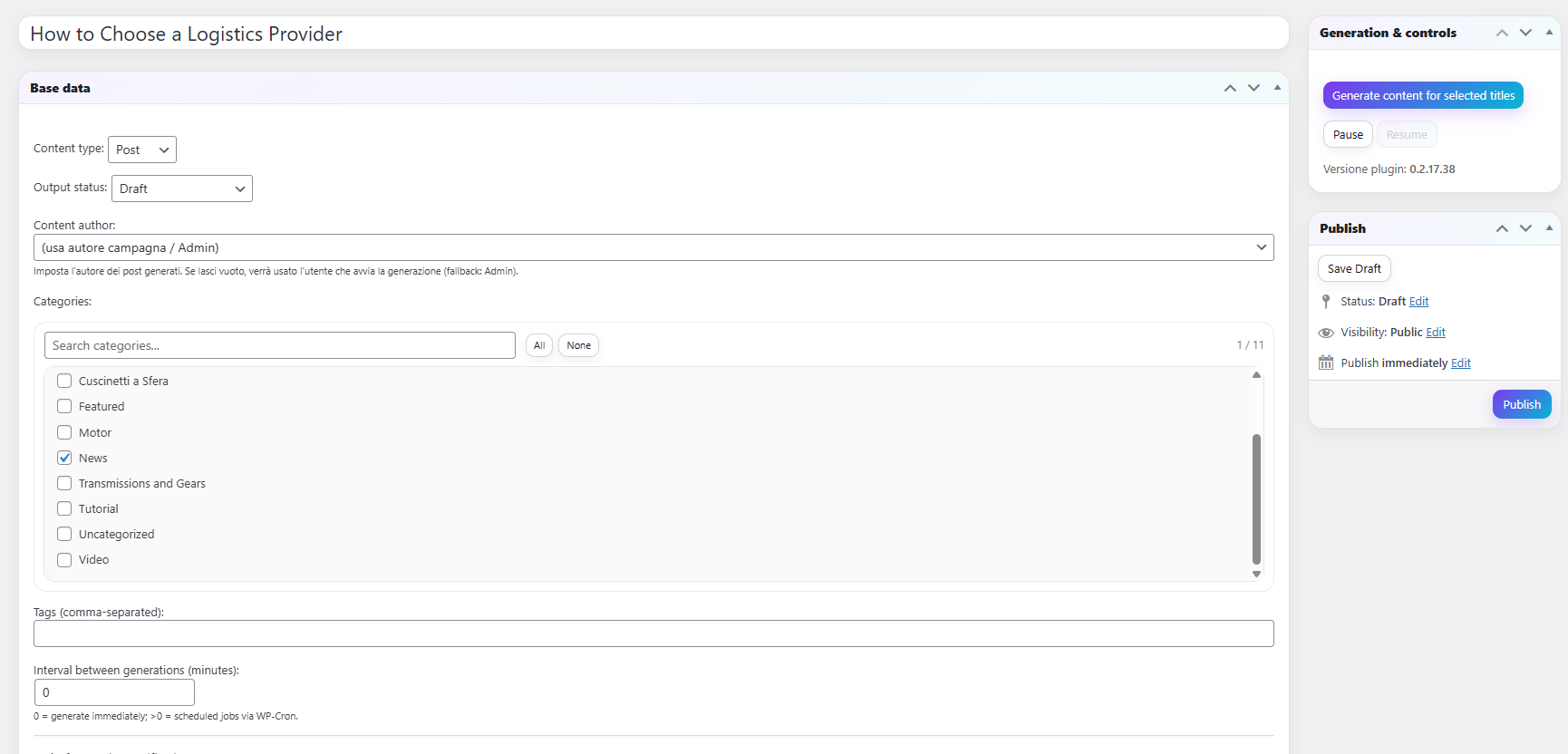
This stage is useful because it reduces confusion later. Instead of generating an article first and trying to correct the direction afterward, AI Content Generator allows users to establish the basic framework early. That creates a more coherent process and helps produce content that is already closer to the intended publishing goal.
The SEO brief shapes the real editorial angle
A topic alone is not enough to produce a strong article. The same subject can be developed in different ways depending on the audience, the keyword focus, and the search intent. This is where the SEO brief becomes one of the most important functions in the workflow.
For an article like How to Choose a Logistics Provider, the SEO brief helps define what the article should really focus on. Should it emphasize cost, reliability, scalability, service quality, or technology? Should it sound more educational or more commercial? By clarifying this before title and content generation, the plugin helps give the article a stronger direction from the beginning.

This is one of the reasons why the plugin is more useful than a simple text generator. It does not just output words. It helps shape the article before writing begins, which leads to stronger titles, better structure, and more relevant final content.
Title generation turns the topic into a real article candidate
Once the direction is defined, the title generation stage transforms the topic into something much more concrete. At this point, the plugin can generate multiple title options, allowing users to compare different editorial angles and select the strongest one.
For example, a topic like logistics could remain very broad if left undefined. But once it reaches the title generation phase, it becomes much more usable. A title such as How to Choose a Logistics Provider immediately frames the article as a practical guide. It signals intent, audience value, and a clearer promise to the reader.
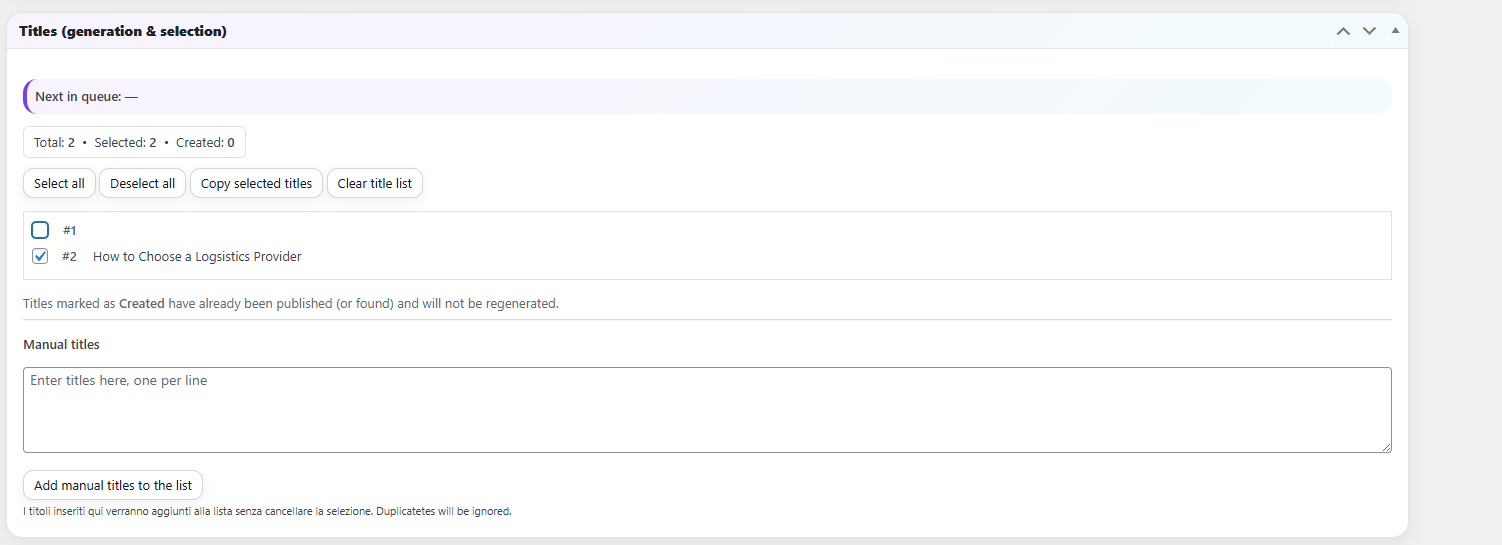
This step is especially important for websites that publish regularly. Instead of brainstorming titles manually every time, users can build a more efficient editorial pipeline. Strong title options can be reviewed, refined, and selected much faster, making the next drafting phase more productive.
How the article is really composed
Using these four stages together, the article starts to take shape in a much more structured way. The workflow is not random. Each function supports a specific part of the editorial build-up:
- Dashboard: gives visibility and organizes the workflow.
- Base Data: defines the initial logic of the article and campaign.
- SEO Brief: shapes the search intent and editorial direction.
- Title Generation: turns the topic into a real article candidate ready for production.
That means an article like How to Choose a Logistics Provider is not created in one random jump. It is composed step by step. First the workflow is organized. Then the article is framed. Then the SEO direction is defined. Finally, the topic becomes a usable title that can move toward full content generation.
Why this workflow matters
This example shows why AI Content Generator should not be seen only as a writing tool. Its real strength lies in how it supports the early construction of the article. It helps users move from a basic idea to a more structured editorial asset with less confusion and more consistency.
For content teams, agencies, publishers, and website owners, this makes a real difference. Instead of working through isolated tasks, they can build content inside a more logical system. That means faster production, stronger planning, and a better foundation for the final article.
Conclusion
The example of How to Choose a Logistics Provider shows how AI Content Generator helps compose an article before the full draft is even written. Through the dashboard, base data, SEO brief, and title generation, the plugin creates a workflow that is clearer, more structured, and easier to manage.
This is what makes the tool valuable in real publishing environments. It does not simply generate content. It helps build the article step by step, giving users a stronger path from topic to publication.